Your event might be accessible. But is the digital journey?
Why accessibility for festivals, events and tourism needs to begin before someone arrives.

Sofie Kim
Digital Accessibility Lead at GSA
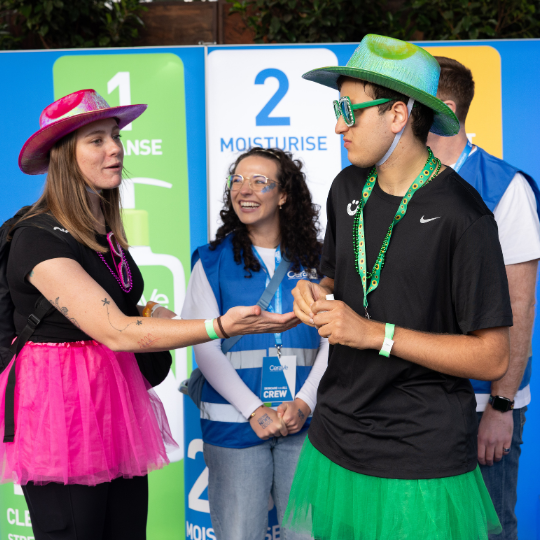
I’ve spent much of my career around music, festivals, events and the arts, both in Australia and Korea. More recently, my work and research have focused on digital accessibility, particularly within festivals and events.
Bringing those two areas together has made me think differently about where an accessible experience actually begins.
When we talk about making a festival, event or tourism experience accessible, the conversation often starts with the physical environment. Can someone enter the venue? Are there accessible toilets? Is there accessible seating? What support is available onsite?
These are essential questions. But for most visitors, their experience begins well before they arrive.
It begins when they search for the event. When they visit the website. When they look for accessibility information, buy a ticket, complete a form, download a map or work out how they’re going to get there.
If someone encounters barriers during those steps, they may never reach the accessible experience you’ve worked so hard to create.
The visitor journey starts online
The role of digital platforms in festivals, events and tourism has changed enormously.
Websites are no longer simply places to advertise an event. They’re part of the event experience itself. Ticketing, registrations, programs, maps, transport information, accessibility guides, social media updates and important announcements can all sit across different digital platforms.
That creates opportunities to make events easier to discover and participate in, but it also creates more points where accessibility needs to be considered.
Imagine someone considering attending a festival for the first time.
They may want to know whether there is accessible parking, where the accessible entrance is, whether a companion can attend, what the terrain is like, whether there is a quiet space or who they can contact if they have specific access requirements.
An organisation may have excellent answers to every one of those questions. But if that information is buried several pages into a website, contained within an inaccessible PDF or inconsistent across the website, ticketing platform and social media, the visitor is still left doing the work.
In my experience, this is one of the accessibility challenges that can be easy to overlook. We can create excellent accessible experiences onsite while unintentionally creating barriers on the journey to getting there.
Physical and digital accessibility are part of the same experience
This distinction matters because people don’t experience an organisation in separate physical and digital compartments.
To the visitor, it’s one experience.
A physically accessible venue doesn’t help someone who can’t independently complete the online ticketing process. A detailed accessibility guide has less value if a screen-reader user can’t access it. An accessible viewing platform may never be used if someone couldn’t find enough information beforehand to feel confident attending.
The same principle applies beyond festivals. A hotel might have accessible rooms but an inaccessible booking process. A tourism operator may have invested in an accessible experience but provide essential information through a digital platform that some customers struggle to use.
That doesn’t undo the good accessibility work happening in the physical environment. It shows why we need to connect the two.
For me, genuine inclusion means considering the journey from the first digital interaction through to the experience itself.
A practical example is Melbourne Airport’s Online Mobility Hub, which brings together accessibility information, journey planning resources and videos to help travellers prepare before arriving at the airport.
Developed as part of Melbourne Airport’s broader accessibility initiatives, supported by GSA, it demonstrates how digital information can help people navigate the physical experience with greater confidence.
There's also a significant audience behind this conversation
Accessible tourism is sometimes treated as a niche consideration. The Australian numbers suggest otherwise.
Tourism Research Australia’s Accessible Tourism in Australia 2024 research found that travellers with accessibility needs and their travelling party took 70.5 million trips, with total expenditure of $29.2 billion. That represented 17% of total tourism expenditure in Australia.
Those figures should challenge the idea that accessibility is relevant to only a small proportion of visitors.
They also reinforce something accessibility practitioners have understood for a long time: an accessible experience rarely benefits only one person.
Someone may travel with family, friends, colleagues or carers. Older travellers may have changing access requirements. People may experience temporary or situational barriers. Clear information, accessible booking processes, captions, readable content and usable digital platforms can improve the experience for a much broader audience.
For festivals, events and tourism operators, accessibility is therefore both a participation issue and part of delivering a better customer experience.
Digital barriers aren't always complicated
When people hear “digital accessibility”, it’s understandable that they might immediately think about technical standards or website development.
Those things matter, but some of the barriers visitors experience can be surprisingly practical.
Is the accessibility information on your website consistent with what’s being communicated through social media and email?
Can someone complete your registration or waitlist form without using a mouse?
If your event map needs to be downloaded, is it usable on a mobile device and accessible to the people who need the information?
Do moving images, videos or other elements make it harder to find essential information?
Can someone easily find who to contact about access requirements or what to do if they need assistance?
These aren’t abstract technical questions. They’re things that can influence whether someone feels confident enough to attend.
And importantly, many of these improvements benefit people beyond those who identify as having disability. Someone accessing your website with a poor internet connection, trying to read information outdoors on their phone, watching a video somewhere they can’t use audio, or navigating an unfamiliar city can benefit from the same clear and accessible digital experience.
Accessibility is part of sustainable tourism too
This conversation is becoming particularly timely.
The United Nations General Assembly has designated 2027 as the International Year of Sustainable and Resilient Tourism.
Sustainability conversations in tourism have traditionally considered environmental, economic and social dimensions. Access and inclusion sit firmly within that social dimension, and there is growing discussion about the role accessibility plays in creating tourism experiences that are genuinely available to more people.
For me, digital accessibility needs to be part of that conversation.
As festivals, events and tourism experiences become increasingly connected to websites, apps, digital ticketing, social media and online information, we can’t talk about inclusive visitor experiences without considering whether those digital touchpoints are accessible too.
The physical and digital experience are no longer separate.
Start before someone arrives
One of the simplest shifts organisations can make is to stop asking only, “Is our venue accessible?” and start considering:
Is the whole journey accessible?
Think about the experience from the moment someone discovers you.
Can they find the information they need? Can they understand it? Can they book or register independently? Can they prepare for their visit? And when something changes, can they easily find accurate information and assistance?
You may already be doing excellent work to make your festival, event, attraction or tourism experience more inclusive.
Digital accessibility helps make sure more people can actually get there.

Sofie
Digital Accessibility Lead
Meet Sofie
Sofie specialises in digital accessibility from a user experience perspective. With a background in events and festivals, her recent research examined the accessibility and usability of digital platforms in these sectors. Her culturally and linguistically diverse background informs her inclusive approach to digital accessibility.
She holds the Certified Professional in Accessibility Core Competencies (CPACC) credential from the International Association of Accessibility Professionals (IAAP).
Have questions? We’re ready to help
Get in touch now
I understand that my data will be hold securely in accordance with the Privacy Policy